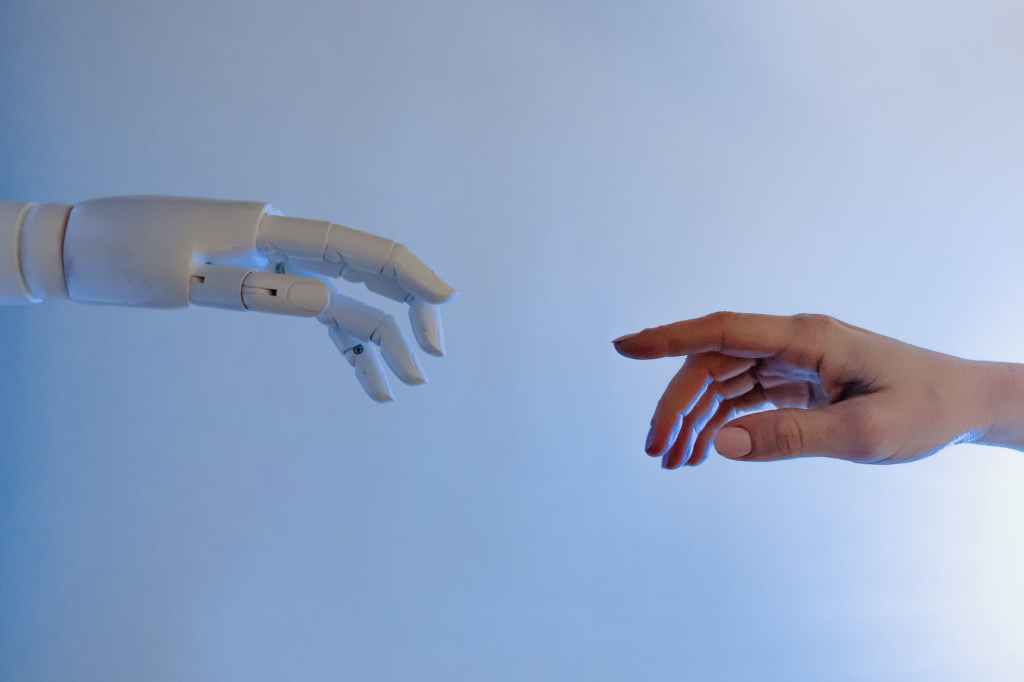
What if the Fibonacci Sequence is a mathematical description of the human, rather than merely a pattern observed in nature?
A mathematical description of the way human capacity develops inside the brain.
What if Fibonacci describes a principle central to living systems: each new state emerging from the relationship between prior states?
Embedding the idea that what comes next is not separate from what came before; but rather it is formed through it.
The Fibonacci sequence begins with apparent simplicity: 1, 1, 2, 3, 5, 8, 13, 21.
Its significance, however, does not sit in the numbers alone, but in the method of generation. Each number is produced by the two numbers preceding it.
The sequence is not random, yet nor is it mechanically repetitive. It grows through relation, accumulation and proportion.
It offers a mathematical expression of recursive becoming.
For me, this is where the sequence becomes interesting as a way of thinking about the human brain.
Our brain does not encounter the world as a blank slate.
It interprets the present through prior experience, bodily state, sensory history, memory, language, attachment, fear, confidence, culture, repetition and expectation.
Every perception is already shaped by what the system has previously lived.
Every response is formed through a relationship between the immediate environment and the accumulated pattern of the individual.
In this sense, the Fibonacci sequence may be understood as a metaphor for neural becoming.
ie: the brain is not a storage device, nor a filing cabinet for facts.
The brain is a living patterning system that receives sensory information, filters what matters, compresses complexity, anticipates what may happen next and prepares the body to respond.
It is always attempting to create coherence from available information.
As we know, human development is not linear, although that is how we ‘map it’ for simplicity’s sake.
We know that a child does not learn to move, speak, read, regulate, calculate, play sport or understand themselves through a neat sequence of isolated milestones.
Instead, their development is layered, recursive and embodied.
The same experience is returned to again and again, but with increasing complexity.
Movement becomes skill. Skill becomes confidence. Confidence becomes participation. Participation becomes identity.
Identity becomes a way of being in the world.
Capacity is not simply the accumulation of information.
It is the ability to hold more relation without collapse: more sensation, complexity, uncertainty, more memory, in a way that is present, while future-facing.
That is a skill, developed overtime. A life’s journey to self-awareness (connection to self) and connection to others.
A well-supported brain – whether child or adult – can draw on what has happened before in order to generate a more coherent next state.
It can learn from yesterday without being trapped by it, anticipate tomorrow without being consumed by it, and respond to the present without mistaking every challenge for threat. If we give ourselves permission.
Learning is the expansion of pattern recognition. It is the capacity to connect what is already known with what is now being encountered. It is the conversion of experience into usable intelligence.
For this reason, repetition, movement, sleep, recovery, rhythm and relationship are not peripheral to learning; they are part of the conditions through which our magnificent human brain integrates experience into capacity.
If Fibonacci describes recursive growth, then overload interrupts the sequence. When a child is exposed to too little sleep, digital novelty, or emotional pressure and too little embodied movement, their dynamic. learning system is asked to keep expanding without sufficient power or refined skill to build enough precision for integration.
In consequence, another demand – as simple as it might be – arrives before the previous state has been processed.
The result? Fragmentation: a little system trying to function while continually playing catch-up with itself.
Many of the environments now shaping children are built for stimulation rather than integration.
And those that have evolved into digital first spaces such as the classroom, are only adding to the cognitive, emotional and physical loads Australian kids are now required to carry.
We are very fortunate to have access to an array of incredible technologies. However, digital platforms deliver novelty faster than the human system can meaningfully process it.
Instead educational and social environments are increasingly interruptions-led, so attention doesn’t have the opportunity to deepen.
We know, algorithmic feeds drive internet-based applications and all mobile phone apps are web-based.
We also know these algorithmic feeds train the brain towards reward, comparison and switching. What we continue to call ‘engagement’ and the system processes as ‘data’ from which it builds prediction.
As we know, the human brain does not become through endless interruption, but rather through rhythm, relation and recovery.
This is where the Fibonacci sequence becomes more than a mathematical curiosity, giving us a language for describing development as cumulative, relational and embodied.
The human body, brain and self are not separate systems.
Movement affects mood, which affects attention. Attention directly impacts learning, and learning affects confidence.
When confidence is the outcome participation follows, and in turn, affects identity.
The human organism is not a collection of disconnected parts, but a living sequence of interdependent states.
This is also why physical literacy matters.
Physical literacy is the development of motivation, confidence, physical competence, knowledge and understanding that supports a lifelong relationship with movement. In educational terms, it is whole-person capacity developed through embodied experience.
A physically literate child is not merely learning how to move. They are learning through movement.
They are developing rhythm, judgement, effort, cooperation, spatial awareness, emotional regulation, persistence, recovery and trust in their own body.
Each experience becomes part of the next experience and each successful adjustment becomes available for future action.
With each moment of capability, the child’s relationship with themselves, with others and with the world around them alters.
This is why the adults and environments around children matter.
A child’s development is not produced by biology alone. It is shaped by the quality of the environments in which the child is required to learn, move, relate and recover.
Homes, schools, clubs, classrooms, teams, screens and coaching practices all become part of the patterning system.
Every repeated experience teaches the brain what to expect and the environments they enter either supports integration or interrupts it, with every pattern becoming part of the next pattern.
Enter the Fibonacci sequence …. maybe, it is not simply a pattern found in shells, flowers and galaxies.
Perhaps it also gives us a way to think about the human brain as a living system of recursive capacity.
If the brain is always creating the next version of the person from the relationships already held within the system, then…
What comes next is never separate from what came before.
As the adults responsible for the environments our children enter, how are we contributing to the process of integrating the information and lived experiences on the daily… ?


Leave a Reply